

June 2026: The ultimate goal for reading: comprehension
Updated: Oct 15

What is reading comprehension?
Comprehension is being able to make meaning from what you read. It’s the whole reason we read! We read to learn new things, to understand the world, and to enjoy stories. From a very early age, children can begin making meaning from what they hear and read, by discussing what they learned, retelling what happened, asking questions, and sharing their feelings and opinions.
Understanding the words on the page is a complex process that involves many different skills working together. Children draw on their vocabulary (the words they know), their background knowledge (what they already know about a topic), and their sense of how language works (how sentences and stories are structured). Comprehension is also supported by phonics skills and the ability to read accurately and quickly. Strong comprehension doesn’t happen all at once! It grows over time as children build fluency, knowledge and language.
How can I support reading at home?
Reading at home doesn’t have to feel like school. Rather than quizzing children after a book, enjoy natural conversations about the story. Wonder, notice, and react together. When children feel that their ideas and opinions matter, they become more engaged readers and develop stronger comprehension skills. Watch the video below about using conversation to improve comprehension.
Talking about your life, books and stories
Families play a powerful role in supporting comprehension every day. When you talk with your child about their experiences, share stories from your family and culture, explore new places, or read and discuss books together, you are helping them make sense of the world. Need ideas of what to talk about? Check out this Let’s Talk About Play calendar from Talking is Teaching.
Comprehension for older students

As children begin to read longer and more complex texts, comprehension support becomes even more important. Some helpful strategies include teaching specific vocabulary, breaking down long sentences or phrases and discussing meaning, rereading, talking about books, or listening to audiobooks of the books they read in print. We also love this daily reading calendar from Read Charlotte’s Read Together initiative, with a different idea of ways to talk about books for every day of a month.
The Oakland Reads site has comprehension activities for all ages, and below you’ll see descriptions of two that are geared towards older readers. Make sure to check out the vocabulary and fluency pages, too — these are key skills for supporting comprehension.
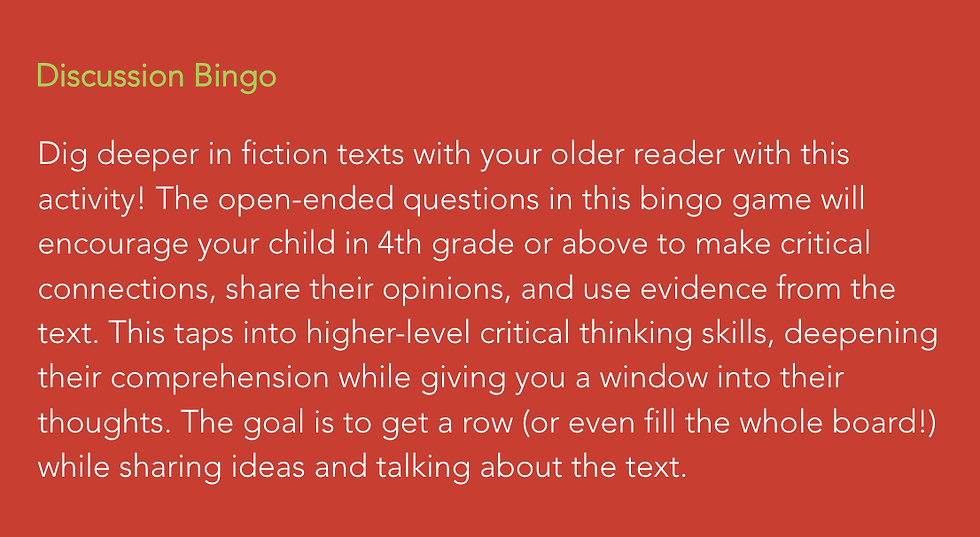
Download Bingo card from NYC Public Schools Literacy Coalition.

Talk about books together this summer

A Reading Town is a community where reading is visible across schools, programs, and public spaces — valued by youth and adults alike, woven into the fabric of daily life, and celebrated as something worth doing. This summer, we’re focusing on the them of “Reading is Joy”, and cultivating reading joy through strategic read alouds. We have developed reading guides for seven books that span ages 0-18 - each has a book summary, some key vocabulary to teach, questions to ask before, during and after reading, and follow up activities. You can find them on the Reading Town page on Oakland Reads.

Watch and learn
Here is one video from the Oakland Reads Birth to Age 2 page and two from the comprehension page with simple strategies to support comprehension that you can try at home - talking, making connections and using a graphic organizer.
Share Your Feedback With Us!
Have you learned something from using Oakland Reads that’s helped you support your child at home? Have other feedback you want to share with us? Sign up to participate in a 30 minute conversation via phone or Google Meet. The first 15 participants will receive a $25 gift card. Or complete this short survey and be entered into a raffle for a gift card.
Comments