
LANGUAGE:
A PROJECT OF:

How Reading Works / Knowing the Meaning of Words
KNOWING THE MEANING OF WORDS

Teachers Call This Skill:
VOCABULARY
Children must understand the meaning of a word to help them understand the world around them and stories they read.
Another goal is for children to build their vocabulary by learning as many new words as they can from life experiences, reading about new subjects and through conversations.
WATCH & LEARN


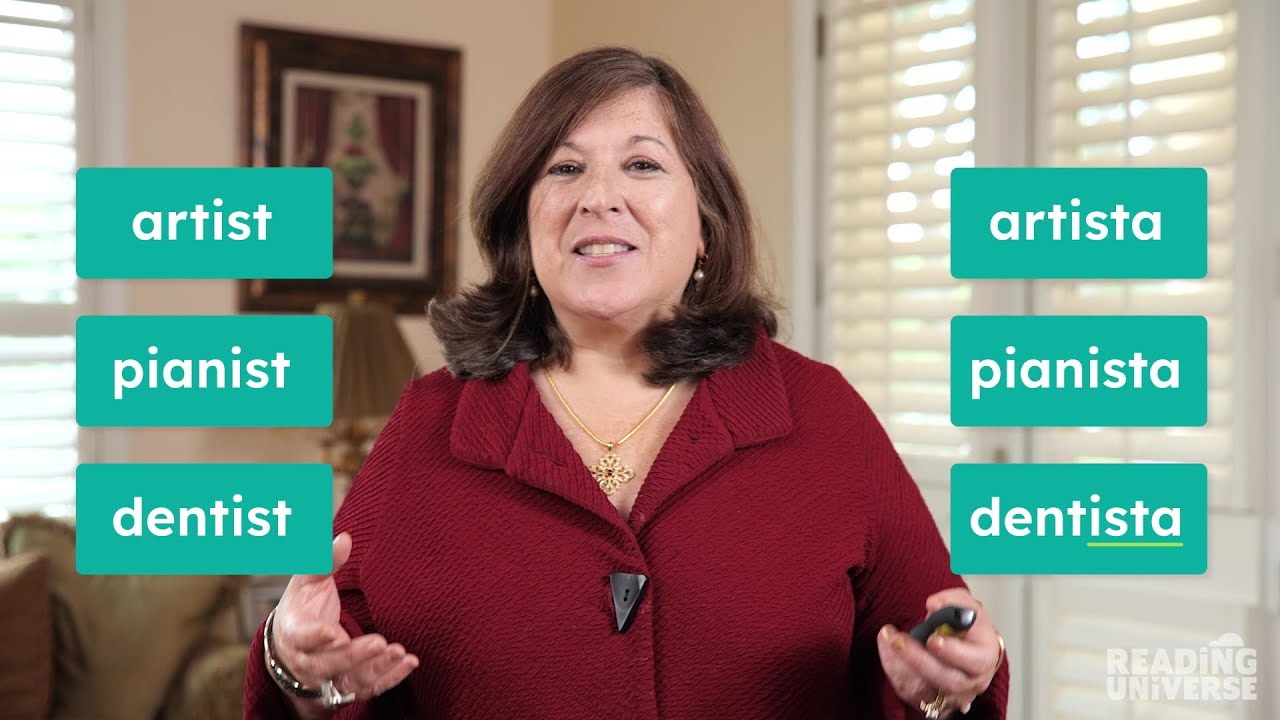


Captions and Languages
To watch videos with subtitles: Click the settings icon in the lower righthand corner, next click “subtitles,” and then “English.”
To see subtitles in another language, after selecting English, next click “auto-translate” and then select the language of your choice.
Support vocabulary by teaching morphology
Morphology is the study of word forms, or morphemes - the smallest units of meaning. Units can include root words that can stand on their own as words, prefixes, suffixes, and bound roots (roots that must have a prefix or suffix added to become a word).
For example, the prefix re- means again, and the suffix -est means the superlative. Prefixes are added to the beginning of words; suffixes are added to the end of words.
Teaching morphology can unlock many word meanings for students, and support vocabulary, comprehension, and decoding, as well as longer and more academic words that they encounter as they get older.


List of common prefixes and suffixes
List of common Latin Roots
List of common Greek Roots
TRY THESE ACTIVITIES
Read Every Day
Reading aloud to your child and having your child read books on their own is the best way to increase their vocabulary. Books provide words they won’t encounter in everyday conversations as the language of books is more complete and formal than talking. A great story also provides context and illustrations for learning a new word.
Play a prefix and suffix game
Try this prefix and suffix game from Room Recess. You can watch a video to learn more about what prefixes and suffixes are then move the rocket ship to separate the base word from the prefix or suffix.
Create a Word Brainstorm
Start with a base word, like “build,” and help your child to create as many new words as possible using a list of prefixes and suffixes. For example, they might make the words rebuild builder, or building.
Use Rich Language
Become aware of the language you use with your child. Often parents will simplify how they speak hoping it will help their child more easily understand what they mean. Instead, aim to use “rich vocabulary,” use interesting words and phrases and bold descriptive words. Give your child every advantage and be intentional by being more specific with the words you choose. Your effort will expand their world of knowledge!
Instead of, “Can you give me that?”
Try: “Could you hand me the plaid dish towel? The one with fringe on the end.”
Which One Doesn’t Belong?
Think of a word family (a collection of words that shares a common definition or ‘sense’, as well as spelling/letters). A word family could be: hop, hopping, hopper, hops or
aquarium, aquamarine, aquaduct.
Write four words down (3 from the word family and one that's not in the family) and ask your child to decide which one doesn’t belong and why. With the above examples, you might write: hop hopeful hops hopping
Extension: ask your child to think of another word that belongs in the word family
Kid-friendly Definition
When reading aloud to a child there will be words that your child does not understand. Children usually don’t tell us because they are unaware of what they do not know. After reading a page, make sure to ask your child if they understood a word that appeared tricky or challenging. Explain what the word means in a “kid-friendly” way, in words they understand, and look for clues in the pictures that will help your child understand.
For example, “Do you know what terrified means? Look at the boy’s face – he’s very scared! Terrified means to be very afraid. Can you say ‘terrified’? Have you ever been terrified of something?”
Make a Connection
When you are pointing out new words to your child, make sure they tell you how they understand the meaning of that word. Can they connect this new word to something they have experienced?
“Can you tell me what the word ‘vivid’ means from the story? Have you ever seen something that was ‘vivid’?”
Take Turns When Talking
Ask your child questions about what they’re interested in, their toys, their favorite characters, their favorite books; make eye contact and listen closely as they speak. Take turns when talking with them. As parents, we sometimes can get in a habit of giving instructions but not engaging in conversations with our kids. Having meaningful discussions at home helps children develop their vocabulary by allowing them to incorporate the new words they have learned into their conversations.
Use Words from School
Vocabulary words are usually gathered from different subjects like science and math or stories they’ve read in school. If the teacher sends a note home about the themes for the week, use those words in your everyday conversation. If students are learning about solids, liquids and gasses in science, ask your child to tell you what those words mean. Describe how you’ve used those words.
Example: “When I take this leftover frozen soup out of the freezer it’s as hard as a rock – it’s solid. Then I warm it up on the stove and it becomes liquid again. If I boil it too long, the liquid begins to evaporate into the air as steam. That’s a gas! You can see it steaming up from the pot and fogging up the window.”
Repeat It 10x
A child needs to hear a new word about 10 times before they begin to use it in their own vocabulary. Take advantage of opportunities to use the new words they’re learning in your conversations with them.
